Latest Posts
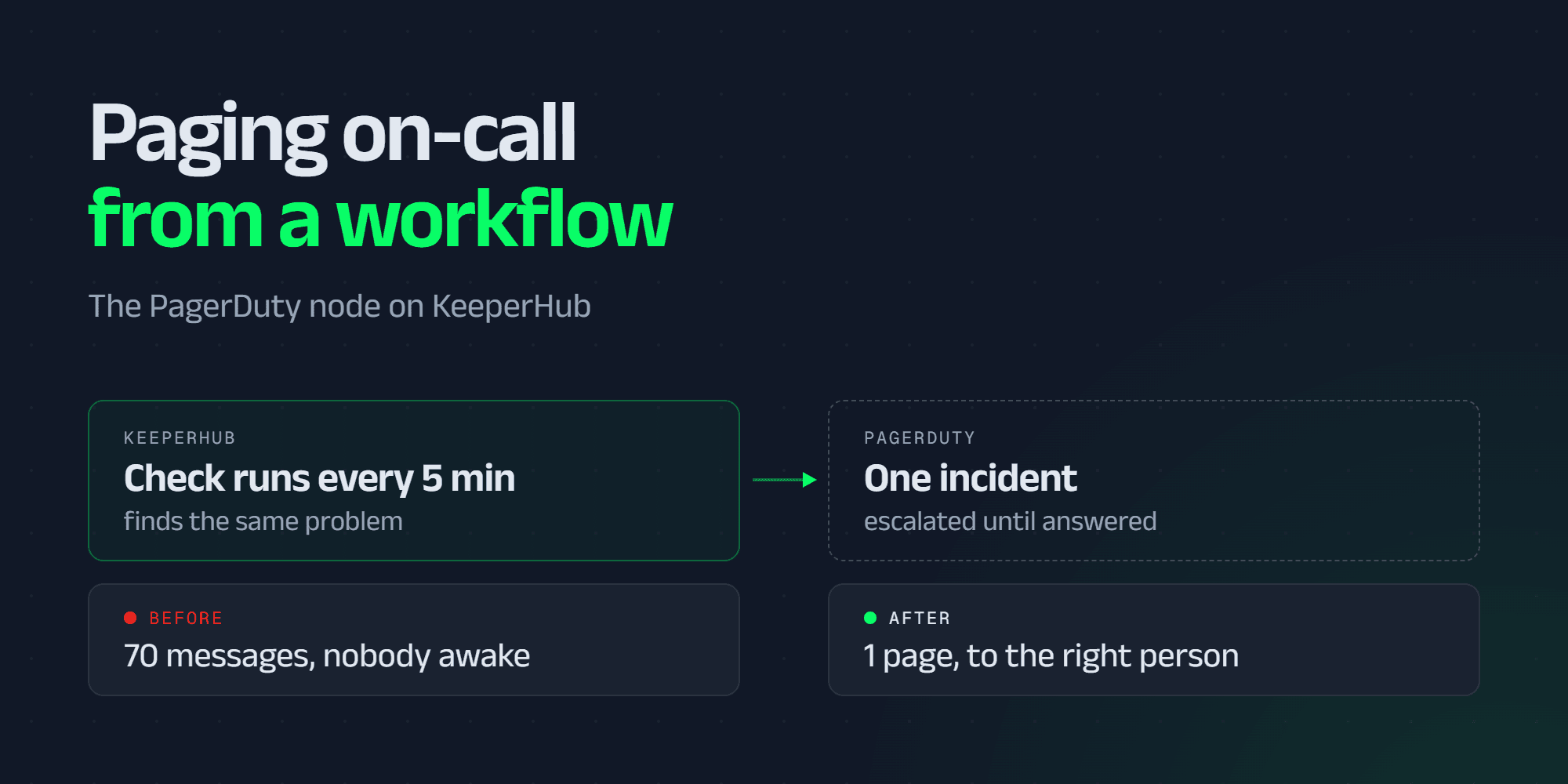
Paging On-Call from a Workflow: PagerDuty on KeeperHub
Your check caught the problem at 3am. It posted to a channel nobody was watching, and you found out on Monday. KeeperHub now speaks PagerDuty: pick a service from your account, and the workflow pages whoever is actually on call.
Agents decide, KeeperHub executes.
KeeperHub for Agents connects AI agents directly to KeeperHub's execution infrastructure: deploy workflows, trigger onchain transactions, and pay for execution autonomously.
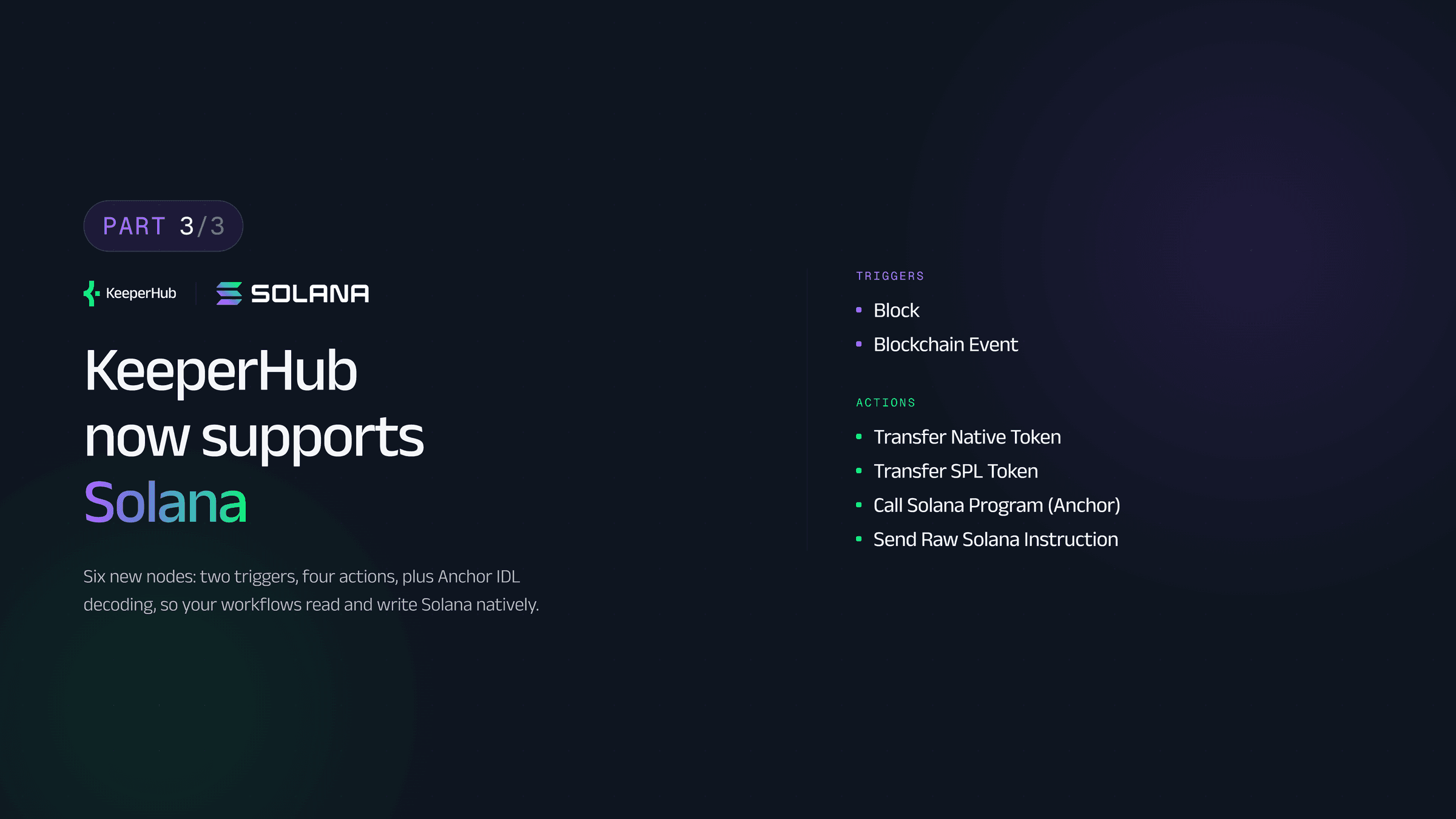
Solana on KeeperHub: A Devnet Tutorial
Every Solana node KeeperHub ships, running end to end on devnet - with the exact agent prompts and workflow templates that produced them, so you can build the same workflows by hand if you prefer.
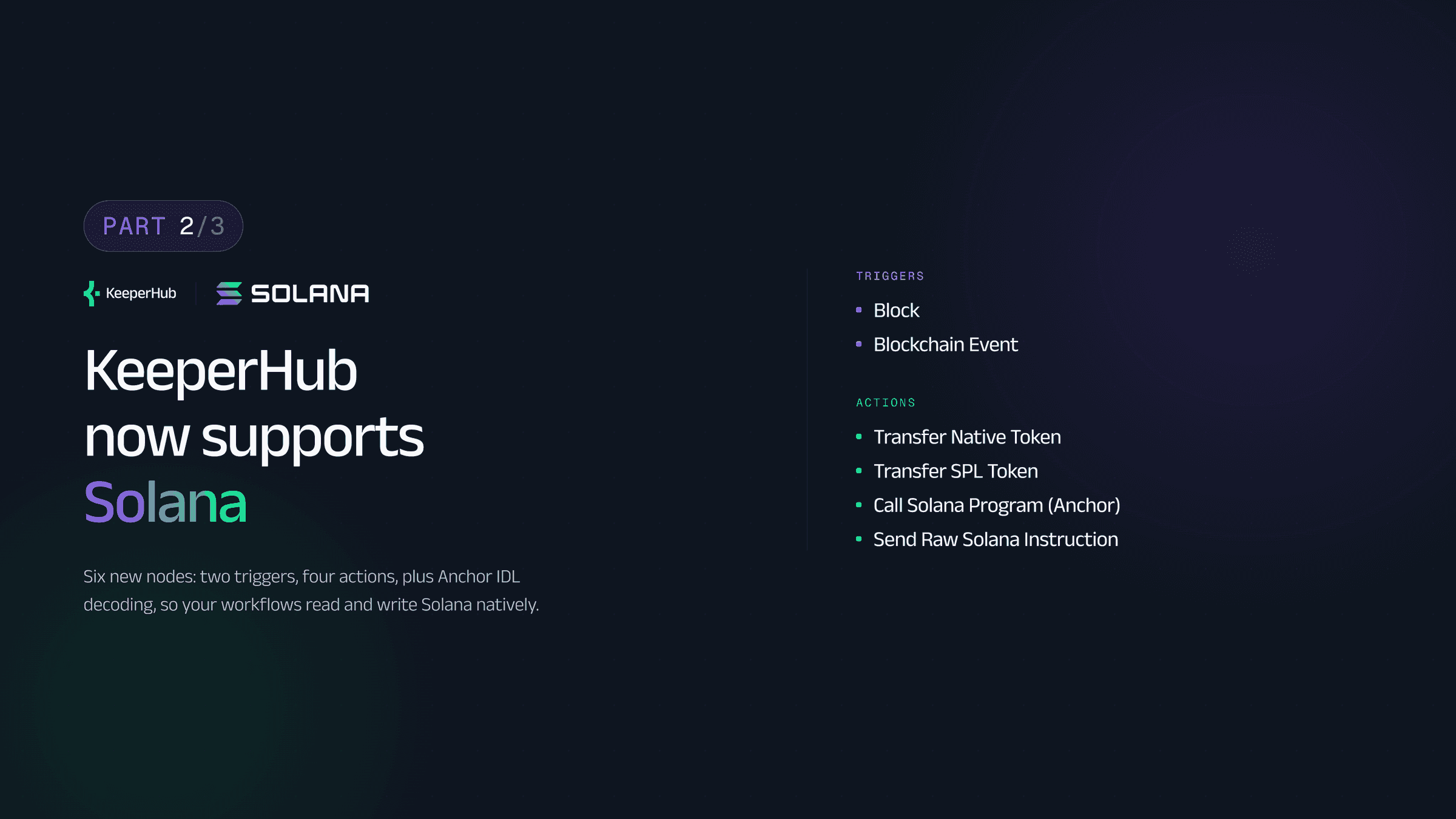
Solana on KeeperHub: Why Now, How We Built It in Two Weeks
Solana was part of our plan from the start. Here is the groundwork that made a two-week build possible, the client ask that gave us the reason to call it, and the one decision the 400-millisecond block time actually forced.
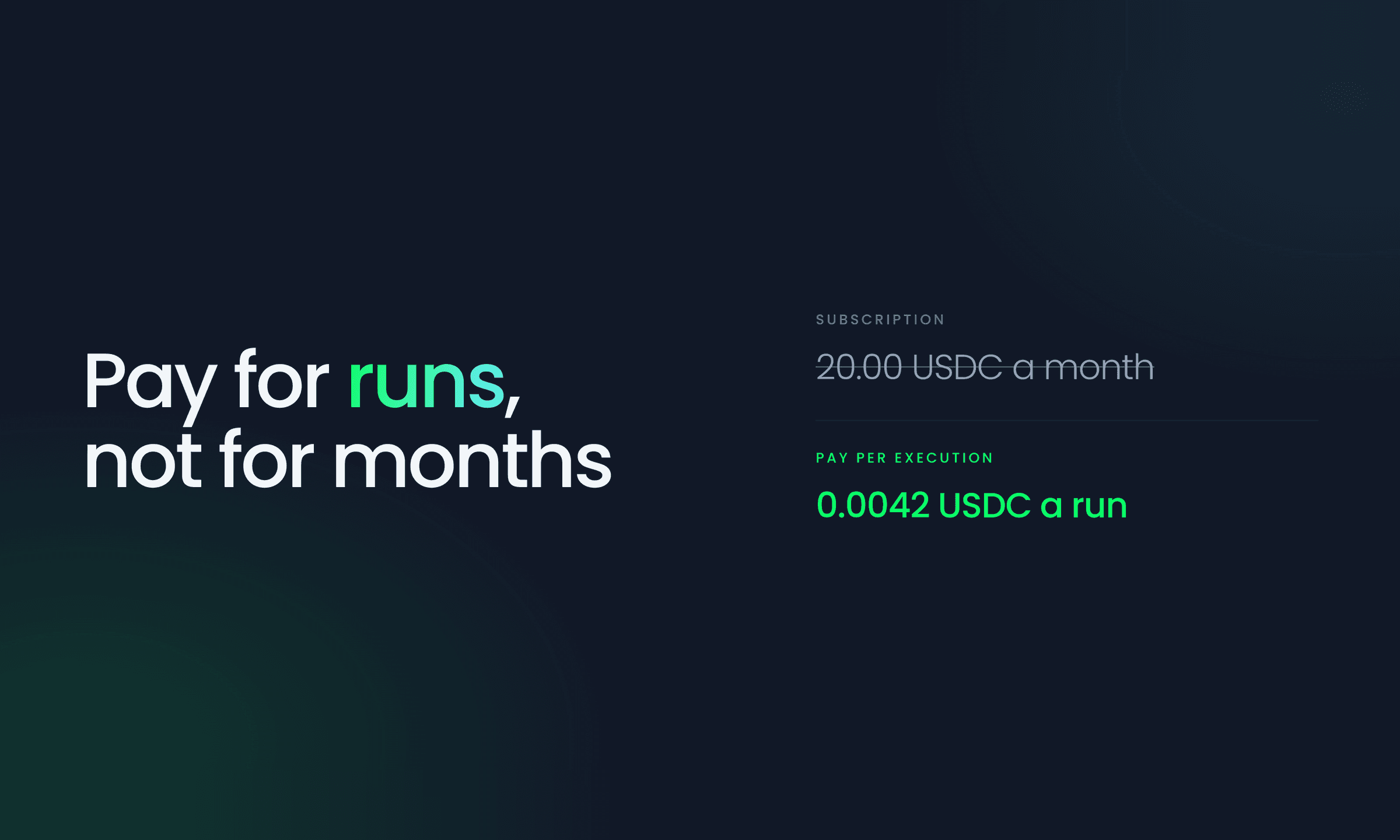
Keep Your Money Until the Work Is Done
Not ready to commit to a plan yet? Pay-per-execution lets you run real automations and pay only for what runs, in USDC, with every charge verifiable on-chain and hard caps you set. A low-risk way onto a paid platform, and a natural on-ramp to Pro and Business.
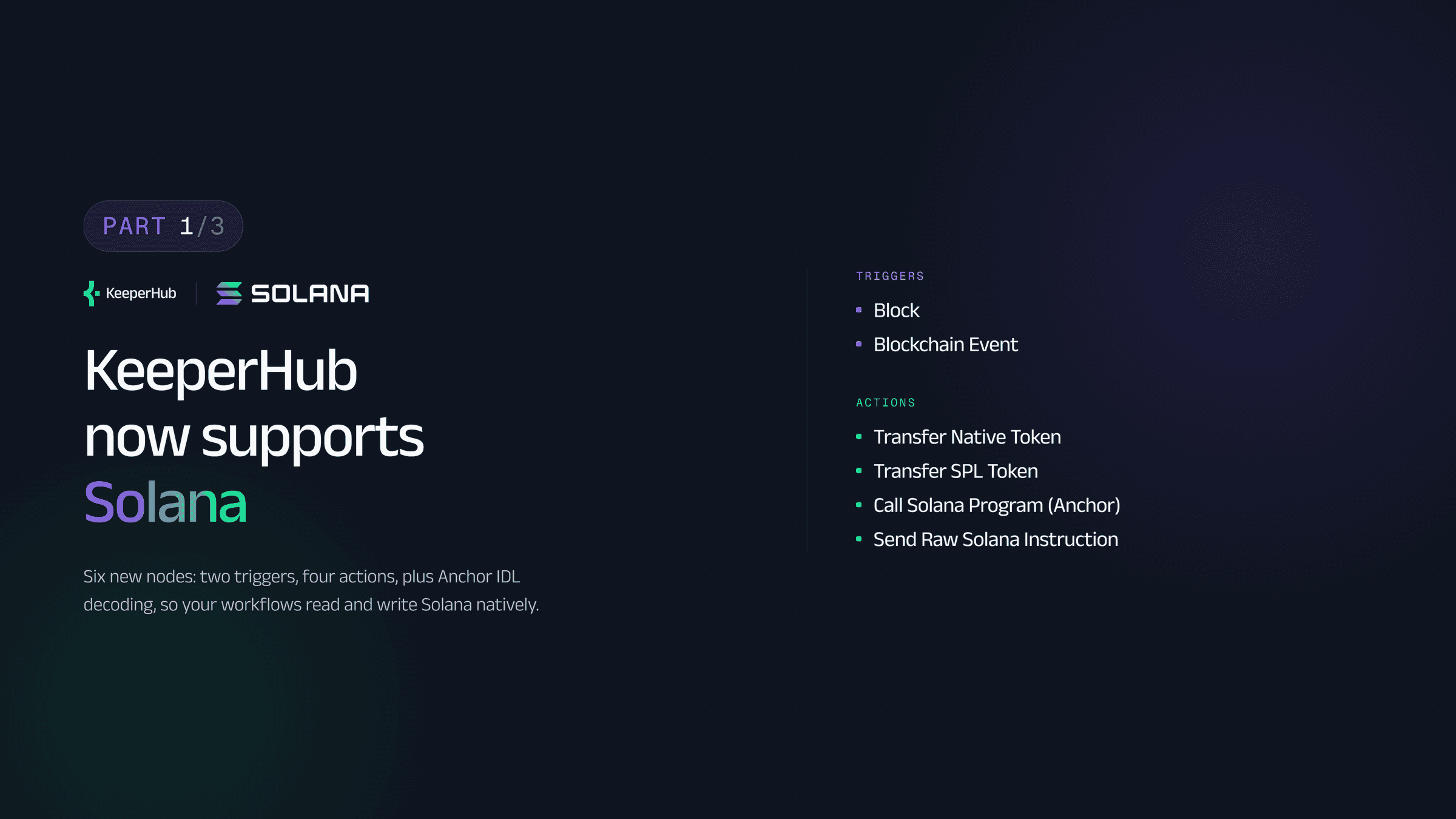
Solana on KeeperHub: Two Triggers, Four Actions
KeeperHub now supports Solana: two triggers to wake a workflow up, four actions to make it respond, and a floor rather than a ceiling on what any Solana program can be made to do.
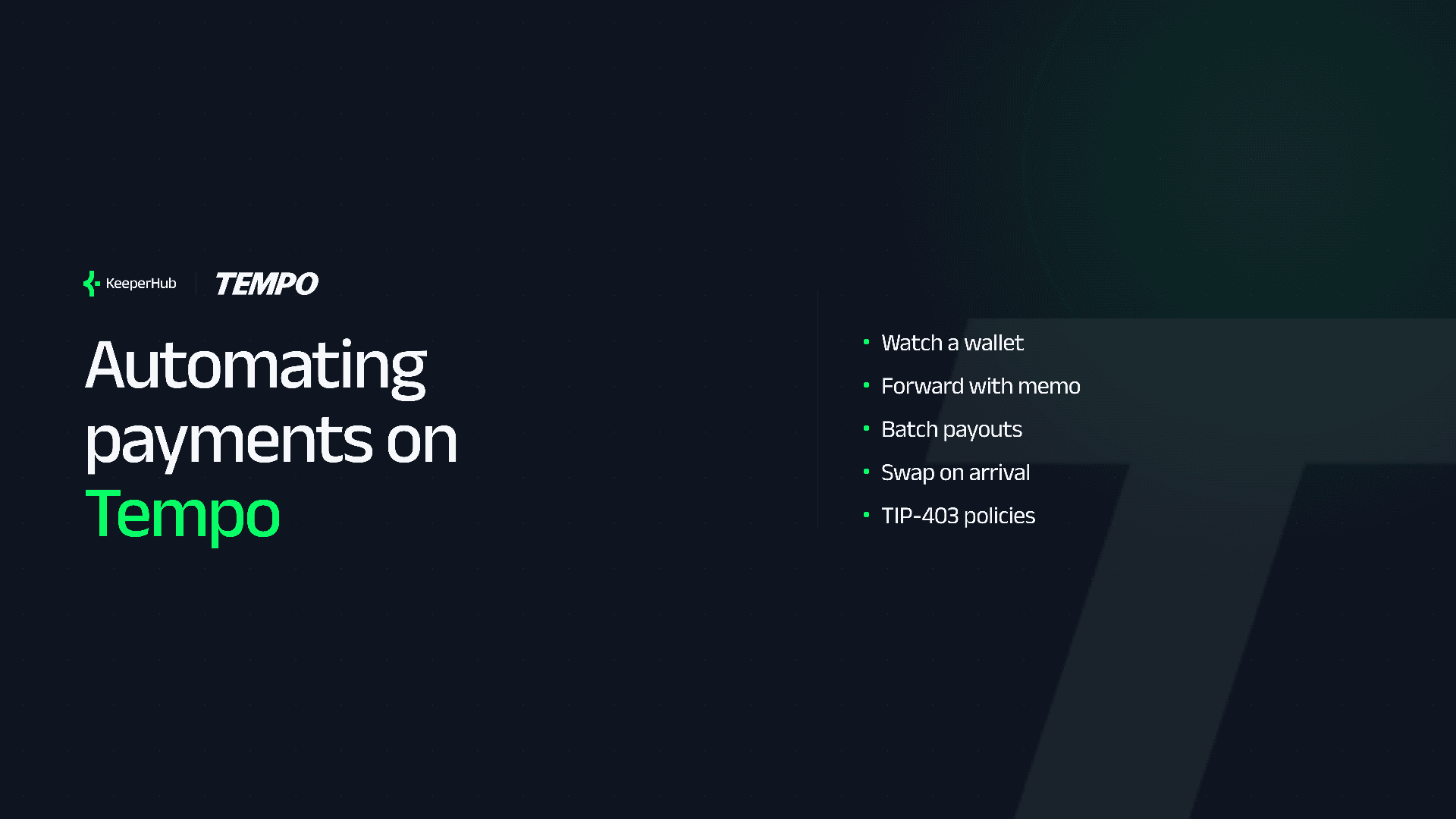
Stablecoin Payment Jobs, Automated on Tempo
You get paid, and then you do the same small ritual you do every time: move your cut to savings, set aside tax, pay the people who helped. That ritual is a handful of separate jobs. On Tempo, there is now a node for each one, and you describe them in plain English.
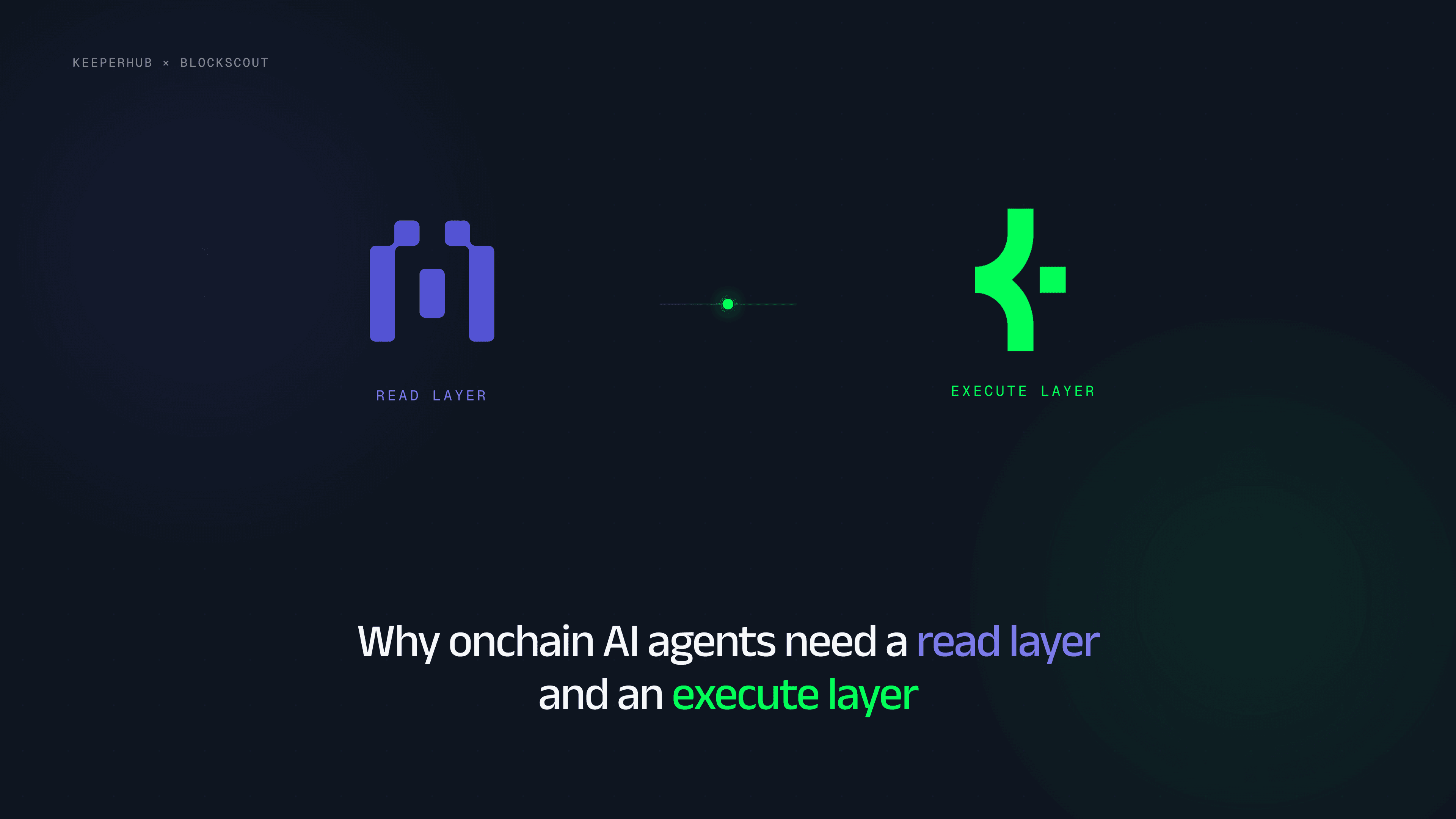
Why Onchain AI Agents Need a Read Layer and an Execute Layer
Read and execute are not two features of the same problem. Blockscout handles the data; KeeperHub handles the execution. Together they form the onchain agent stack.
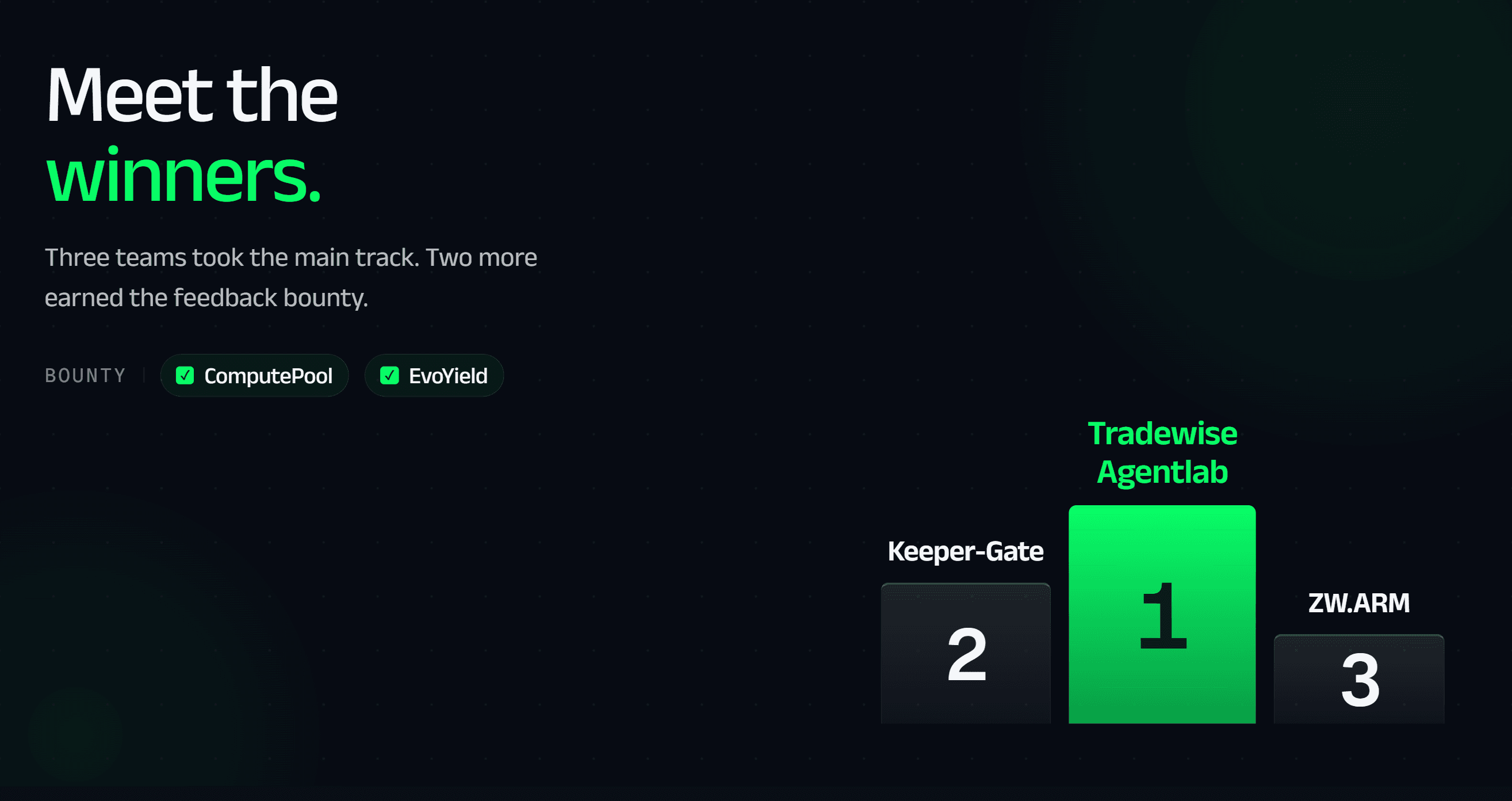
What 180 Hackathon Builders Taught Us About Agents
We reviewed all 180 submissions from the ETHGlobal Open Agents hackathon. Here is what we found, who won, and what comes next.
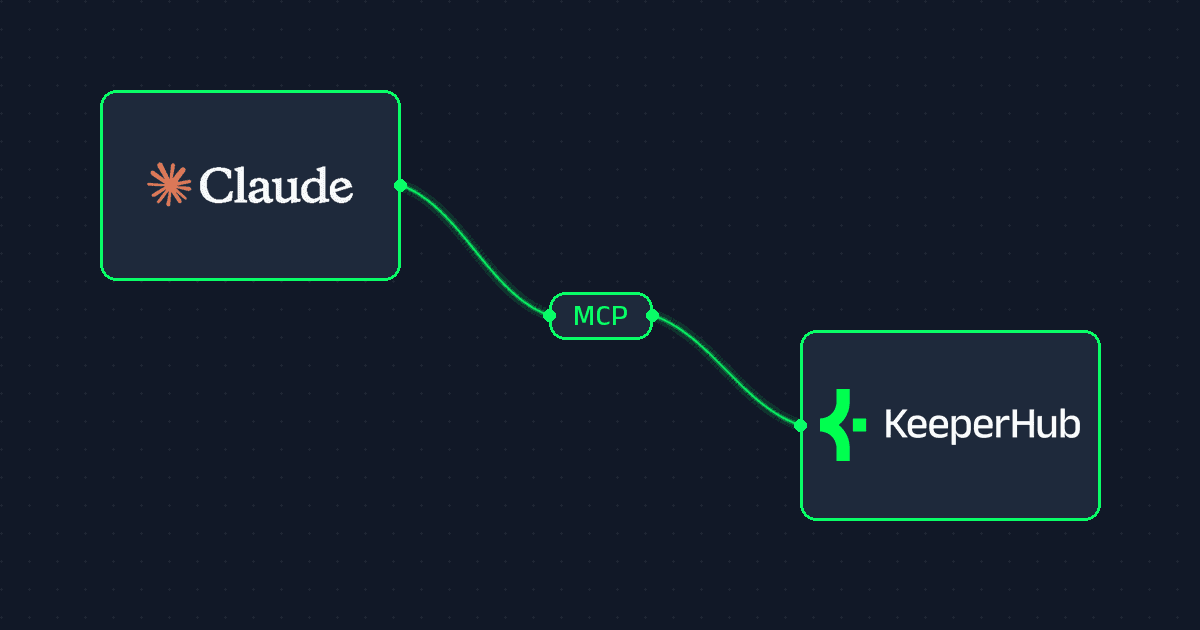
DeFi Infrastructure Goes Agentic
Agents are calling onchain services, paying per call, and composing workflows autonomously. KeeperHub is the agentic infrastructure layer underneath.
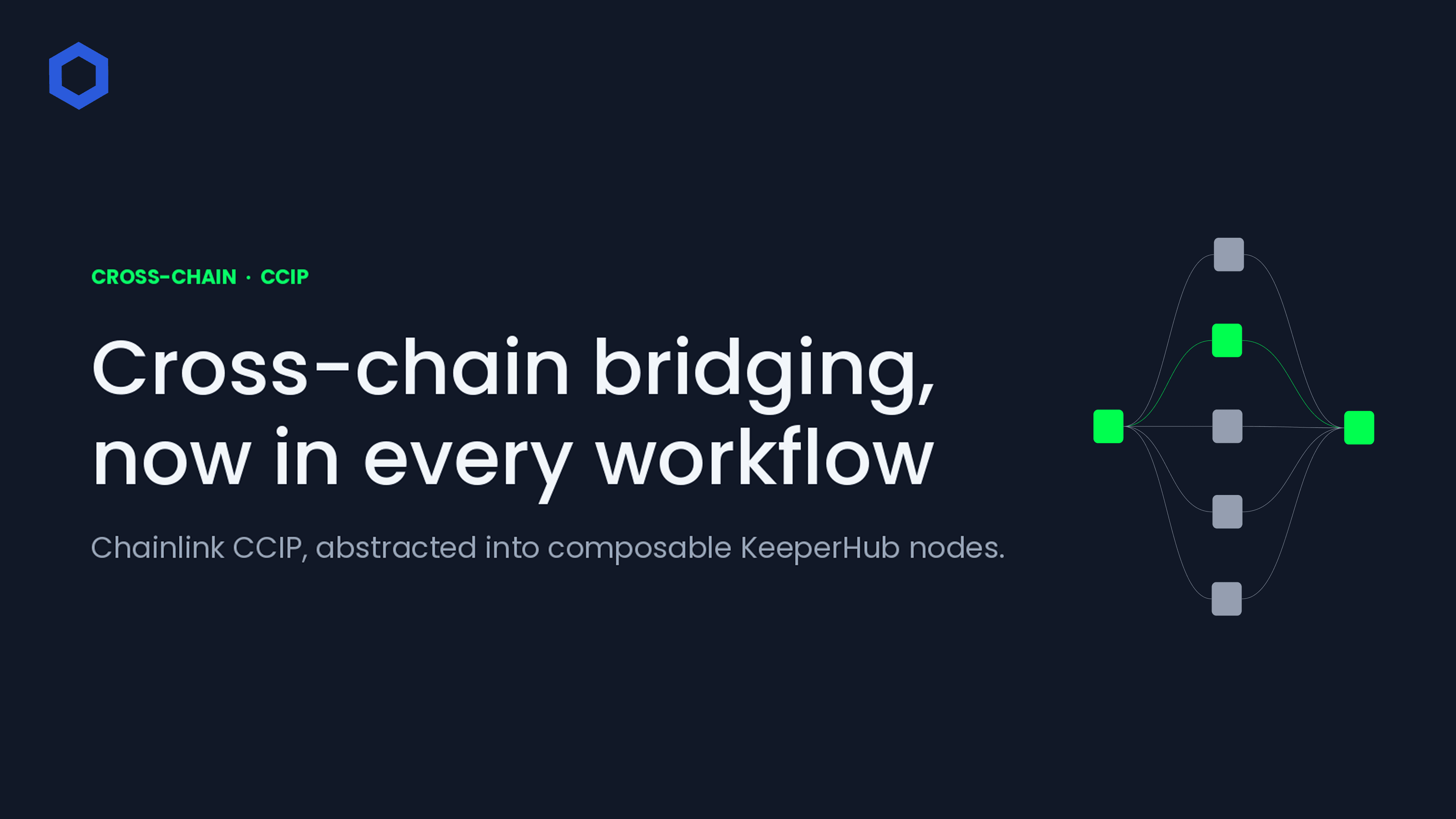
Cross-Chain Bridging with Chainlink CCIP on KeeperHub
We rolled out native cross-chain bridging powered by Chainlink CCIP. Eight Protocol Nodes turn a full bridge flow into a composable set of workflow steps: check balances, quote fees, approve tokens, and send.
How We Sign Your Transactions Without Holding Your Keys
Every KeeperHub workflow signs transactions without anyone watching. Here is the wallet infrastructure underneath: keys in hardware, signing that fits every chain we support, and an export flow that lets you walk away whenever you want.
Our First Hackathon: ETHGlobal OpenAgents
KeeperHub has partnered with ETHGlobal for OpenAgents, our first hackathon. Seven years of execution infrastructure work, meeting the agent builders who need it.
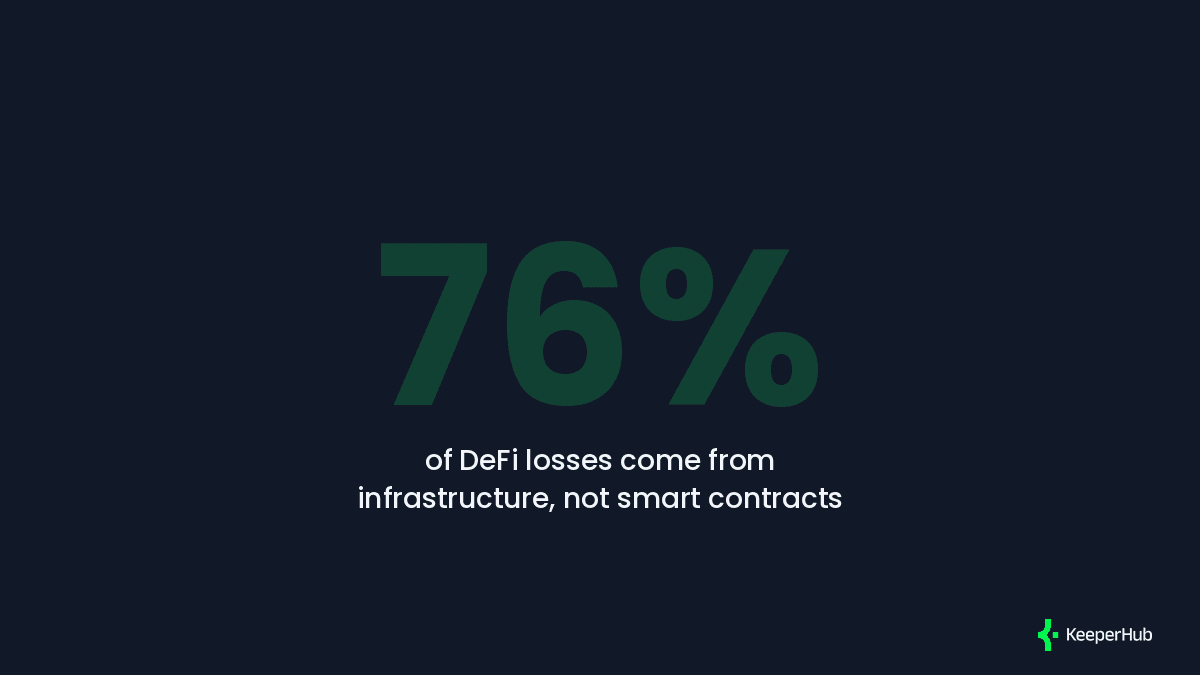
The $25M Key That Wasn't in a Smart Contract
Resolv lost $25M through a compromised AWS key, not a smart contract bug. 76% of DeFi losses in 2025 came from infrastructure, not code. The execution layer is the real attack surface.
x402 vs MPP: Neither Solves Execution.
Coinbase x402 and Stripe MPP solve how AI agents pay. But how they act on-chain is the other half. Neither protocol addresses execution infrastructure.
The $1.4B Hack a Single Automation Would Have Caught
The Bybit hack stole $1.4B through a compromised UI that fooled every signer. A single automated workflow polling the Safe Transaction Service would have caught it.
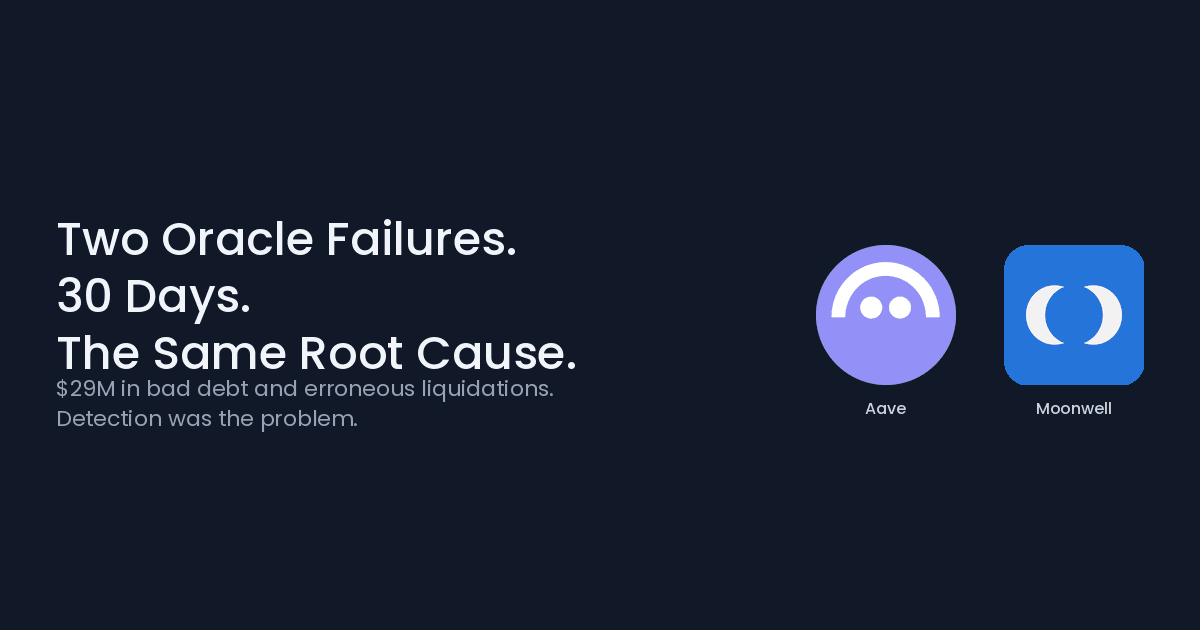
Two Oracle Failures. Thirty Days. The Same Root Cause.
Moonwell lost $1.78M. Aave saw $27M in erroneous liquidations. Both incidents were detectable before a single bot ran. Here is what runtime monitoring changes.
MCP Standardised the Interface. It Didn't Solve Execution.
Your AI agent can detect and decide. KeeperHub is how it acts: reliable, audited, on-chain execution through a single MCP server connection.
How We Keep Sky Protocol Running with 100% Uptime
A look at how TechOps Services, the team behind KeeperHub, has delivered 100% uptime for the largest on-chain stablecoin issuer since 2018.
Welcome to the KeeperHub Blog
Introducing the KeeperHub blog — your go-to source for Web3 automation insights, product updates, and technical deep dives.